PREVIOUS
PSBTA Applauds FirstNet Authority’s Network Expansion



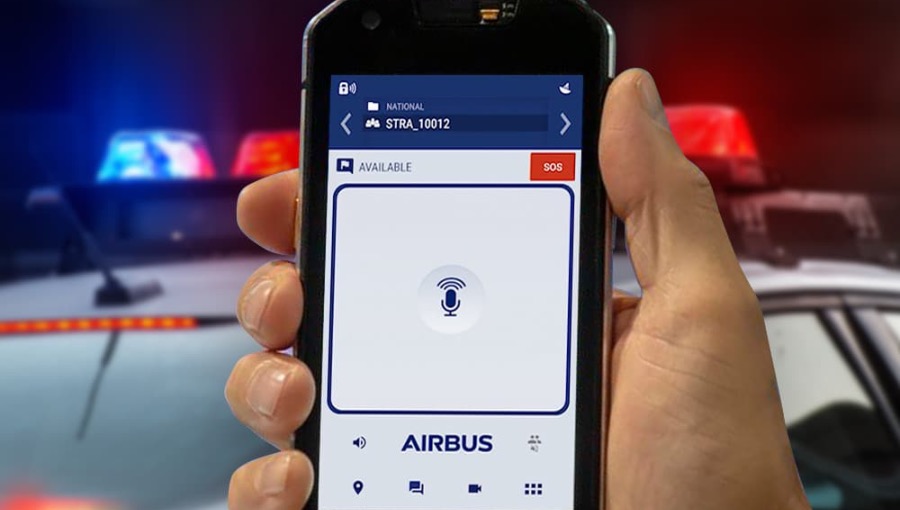
As mission-critical communications evolve across the Middle East, Africa and India, Airbus Defence and Space is focusing on modernising public safety networks while ensuring long-term reliability. Thibaut Faivre, Head of Sales and Programme Delivery for Public Safety and Security at Airbus Defence and Space, says 2026 will be shaped by the continued operation and upgrade of TETRA networks, accelerated migration to broadband technologies, and the convergence of terrestrial and satellite communications to support secure, resilient operations for public safety, oil and gas, transportation and private security organisations.
What opportunities do you foresee for 2026, and how do you plan to leverage them?
We foresee the maintenance of TETRA critical communication networks in the Middle East, as well as their upgrades to the latest standards, as opportunities for 2026 which will translate into long-term contracts. The large majority of our customers will indeed continue operating TETRA for a long period.
In parallel, we want to keep pioneering the migrations of communication systems from narrowband to broadband, which are accelerating at a high pace in the region, with both mission- and business-critical organisations. We will leverage the successful European transitions (RRF in France, SIRDEE in Spain and Virve in Finland) that we have been supporting. We also consider the convergence of communication technologies as another opportunity for next year, especially the integration of satellite connectivity.
What major challenges did you encounter this year, and how did you address them?
In addition to being an opportunity, the acceleration of migrations to broadband for critical communications was also a major challenge for us this year, especially in the Oil & Gas sector. We had to set up an ambitious recruitment plan to attract regional talents and integrated teams with our customers. The lessons learned from such a digital transformation of public safety organisations in Europe, that we are involved in, was also very helpful in addressing this challenge in the Middle East.
Can you elaborate on your strategic partnerships this year and plans for next year?
It was important to us this year to strengthen our existing strategic partnerships with our Value Added Resellers (VARs) in the region. In 2026, we plan to partner with new Mobile Network Operators (MNOs), which are key in penetrating new markets with critical communication solutions and services over 4G/5G. We also want to leverage Airbus’ strong partnerships with regional universities such as Khalifa University.
What will be your primary focus areas and strategic priorities for 2026?
The interoperability of TETRA networks within the Gulf Cooperation Council (GCC), several of them being maintained by Airbus, will be part of our strategic priorities in 2026. The GCC countries are indeed creating gateways between their respective communication systems to answer the increasing need for interstate collaboration. We will also focus on supporting our customers in a smooth transition to broadband and making sure that end users accept new technologies as part of their missions in the field.
Are there plans to explore new markets or introduce new products/applications in 2026?
We will explore both the private security and transportation markets next year as their agents also require secure, resilient communication and collaboration solutions to carry out their daily missions more effectively. In terms of new solutions, we’ve recently launched Agnet Direct that allows mission-critical applications (MCX) users to stay connected to team members even when 4G/5G networks are not available. The solution has been developed by Airbus and field-proven as part of France’s Réseau Radio du Futur (RRF – radio network of the future), the first nationwide broadband communication network in Europe for domestic security and emergency rescue forces.
In detail, Agnet Direct includes a smartphone with the Agnet mobile application, an accessory (a smart remote speaker microphone – RSM) connected to the smartphone via bluetooth or cable, and offers 4 modes, to be chosen and activated before any operation, depending on the environment’s complexity: network mode, direct mode, dual mode, gateway mode. Being easy-to-use and reliable, Agnet Direct thus ensures network resilience, off-network coverage, and local incident scene communications for end users. The direct mode is specifically essential in scenarios such as natural disasters, major fires, underground rescues, wildland firefighting, tactical operations and network outages/overloads.
How is your company approaching sustainability, digital transformation, or AI adoption in preparation for 2026?
The migration to broadband being the main trend in critical communications today, all our customers are already reflecting upon their digital transformation, or have started it, and we are making our own solutions and services evolve accordingly to support them. In detail, we are actively integrating AI into our communication and collaboration solutions such as Agnet to enhance operational efficiency, responsiveness, and security for end users in the field. AI indeed allows advanced data analysis, predictive insights, and automated workflows that help first responders and control centers act proactively rather than reactively.
From detecting anomalies in real-time video feeds to automating incident classification and resource allocation, AI enhances the speed and accuracy of critical operations. As for sustainability, our narrowband (TETRA and Tetrapol) products have a long lifespan, with downward compatibility and compliance with regulations ensured. We are also analysing key environmental requirements and strive to integrate them into our solution lifecycle aiming for more eco-friendly output. These requirements include lowering energy consumption and eco-focused design.
Read the original article here