PREVIOUS
NO MORE



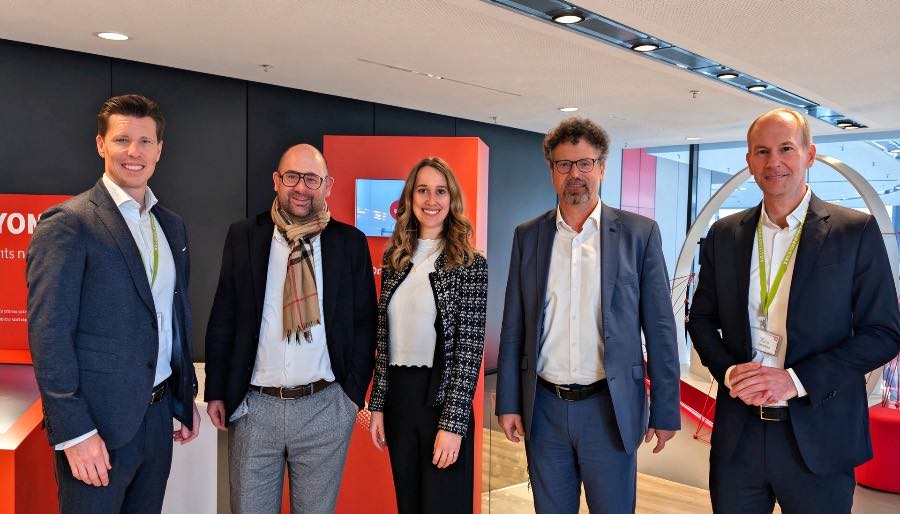
As part of the KoPa_45 research project “Hybrid Network for Broadband MCX Mission-Critical Communications for Public Safety Organisations”, Frequentis successfully tested its MissionX ecosystem together with partners NKMG, Teamwire, and Vodafone under user-specific, real-world operational conditions.
Through the joint integration of the Frequentis MCX service’s interface with the Vodafone mobile network, individual and group communications can be dynamically prioritised. This ensures that communications for public safety authorities and organisations are given priority also during periods of high network utilisation.
The integration of the Frequentis gateways enables Teamwire’s messaging service to provide MCX functionality in conjunction with the MissionX ecosystem. This demonstrates that the messaging solution can become part of a standardised MCX architecture.
Interconnectivity between MCX services and the current emergency services digital radio system was successfully demonstrated via the Frequentis MCX-TETRA gateway as part of a practical implementation of a call group conference, and alternatively via the Frequentis LifeX control centre platform. Communication between MCX and the TETRA public safety radio network is possible.
With this, Frequentis has demonstrated not only its expertise in developing a practical, high-performance MCX ecosystem that can be scaled to meet specific user requirements, but also its ability to bring together the right partners to implement this innovative technology concept and establish it in the market.
“The transition from TETRA to MCX can work in practice, without requiring emergency service organisations to completely replace their existing communications environment,” says Marcel Haar, Managing Director of Frequentis Deutschland GmbH. “Together with our partners, we can support emergency services with our technology and know-how in the tailored implementation of mission-critical broadband communications with immediate effect.”
The advantage of Frequentis’ open MCX ecosystem is that it can be precisely scaled and configured to meet the specific operational requirements of individual public safety authorities and organisations, enabling them to operate with maximum efficiency and cost-effectiveness while minimising risk. This also applies during the migration from TETRA to MCX.
"Collaborations with partners like Frequentis form the foundation for the digitalisation of tomorrow. On one hand, they help realise new digital solutions for society and the economy, such as network prioritisation. Above all, however, they are essential for ensuring a practical, real-world focus, so that digital solutions can be applied flawlessly in everyday life, deliver tangible added value, and make Germany even better prepared for the future," says Michael Jakob Reinartz, Director of Innovation at Vodafone Germany.
"The transition from established TETRA digital radio to modern broadband services is not only a promising vision for mission-critical communications, but also offers significant added value for the interoperability of IT solutions and specialised operational systems. The “Hybrid-Eins” project has brought the near-term technical realisation of these concepts within reach,” states Tobias Stepan, Managing Director, Teamwire.
MissionX is an open ecosystem comprising Frequentis solutions. It connects existing systems, new broadband services, mobile networks, and applications from different suppliers. 3GPP conformity and open interfaces ensure its interoperability. Emergency services organisations can continue to use existing applications and flexibly integrate new functionalities, without being tied to a single provider in the long term