PREVIOUS
Deutsche Telekom Unites 5G and Public Safety Radio With T Mission



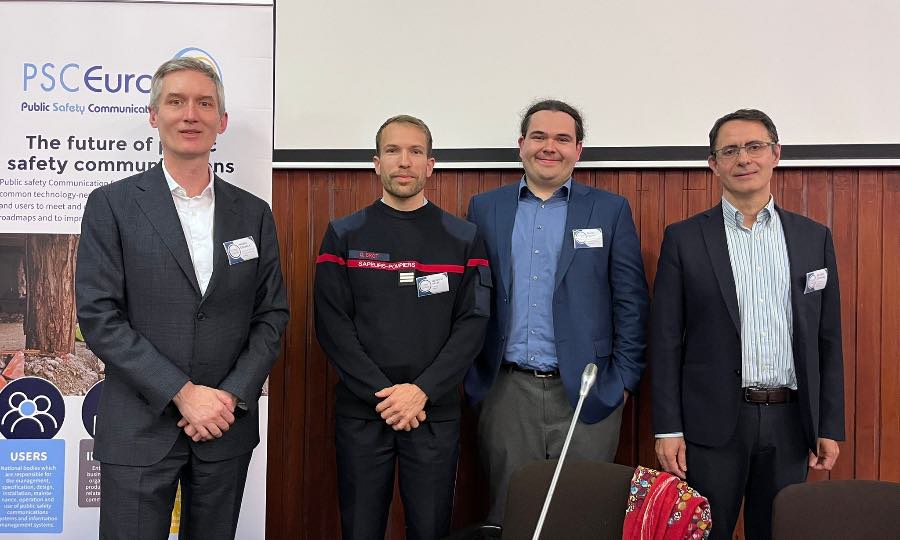
Public Safety Communication Europe (PSCE) successfully concluded its Winter Conference in Brussels last week, bringing together public-safety agencies, telecom operators, technology providers, researchers and EU project teams to advance the future of mission-critical communications across Europe.
The event provided a unique platform for industry experts and first responders to exchange insights on operator engagement, telco-cloud evolution, private 5G deployments, cross-border MCX capabilities and emerging technologies such as AI and satellite-enabled services.
Industry Contributions: Alexandre Harmand (Telefónica) delivered a well-received presentation on operator strategies for edge computing, network slicing and telco-cloud convergence, outlining their impact on next-generation public safety networks.
Private 5G for First Responders: Jens Buysse (Citymesh) shared practical updates on private mobile network deployments and their growing importance for emergency services.
Practitioner-Led Sessions: Emergency service representatives and European project teams presented case studies on EUCCS readiness, hybrid MCX architectures, off-network solutions, rescue robotics and space-supported communications.
Participants reviewed progress toward cross-border MCX roaming, testing frameworks and the operational models required to support seamless communication across EU member states.
Operators and technology providers examined the role of edge computing, cloud federation, and sovereign infrastructure in delivering resilient, low-latency services for public safety organisations.
Speakers showcased the increasing role of AI in situational awareness, as well as satellite technologies that strengthen connectivity during major incidents and in remote areas.
With a strong mix of practitioner insight, technical innovation and strategic planning, the PSCE Winter Conference continued its role as a key forum for aligning European public-safety communication priorities with real-world operational requirements.