PREVIOUS
TCCA Sets Out New Broadband Callout Specifications



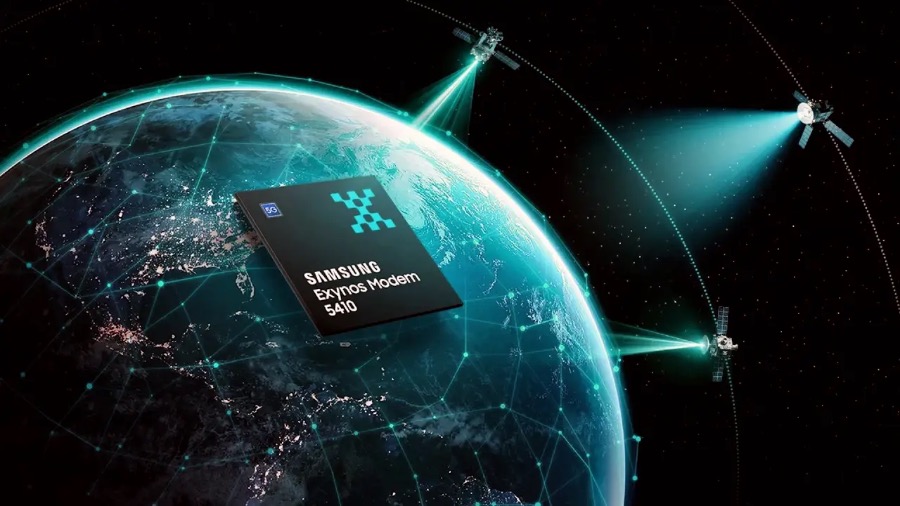
Keysight Technologies and Samsung Electronics have successfully demonstrated live New Radio Non-Terrestrial Network connectivity, representing a major leap forward in standardized direct-to-device communications. The collaboration delivered industry-leading performance in the n252 S-Band, demonstrating in practical terms the feasibility of 3GPP Release 19 standards. These standards include advanced protocols for satellite-to-satellite mobility, critical for keeping data connections stable as devices move between different orbital nodes in a constellation.
The n252 S-Band is especially important for letting regular smartphones connect straight to satellites without any special equipment, a capability that brings satellite connectivity into the next generation of cellular networks. Keysight provided the complete emulation environment needed to simulate challenging orbital conditions, including high Doppler shifts and the long signal delays that come with satellite communications. Samsung used its latest NTN-capable modem technology to test the physical and protocol layers of the Release 19 specification. Both companies confirmed that major industry players are focusing on open standards to power the next generation of broadband connectivity, with results showing that standardized services are getting close to being ready for commercial launch. After this successful live demonstration, both companies plan to conduct more detailed compatibility testing throughout 2026, aiming to create a reference design for companies that want to add satellite connectivity to their consumer and industrial IoT products.
While Samsung pushes forward with its satellite connectivity work, Qualcomm is dealing with growing competitive pressure across the wireless communications market. The company has been building up its position in the mobile chipsets market through new product releases, using Snapdragon processors that support compelling AR experiences, top-tier 5G connectivity, and artificial intelligence features for laptops and desktops. Even with these efforts, Qualcomm is battling Intel in the AI PC market, while Samsung’s Exynos processors are competing in the premium smartphone segment and MediaTek is capturing more market share in mid-range devices.
Still, Qualcomm is in a strong position to hit its long-term revenue goals thanks to solid 5G momentum, better market visibility, and multiple income sources. The company is seeing real progress in edge networking, which is changing how connectivity works in cars, businesses, homes, smart factories, next-generation PCs, wearables, and tablets. Qualcomm has been growing its presence in vehicle-to-everything communication systems after acquiring Autotalks, which gave the company access to deep V2X know-how. Market watchers pointed out that as NTN-ready chipsets from Qualcomm, MediaTek, and Sony Altair go into mass production, Direct-to-Device functionality will be built into smartphones, wearables, and connected devices as a default option, opening up new business opportunities even as the company faces pressure in its traditional markets.
AST SpaceMobile has been making real headway in building the world’s first global cellular broadband network in space, accessible straight from regular smartphones for both commercial and government users. The Texas-based company recently launched its largest satellite to date from India, with the BlueBird 6 spacecraft lifting off from the Satish Dhawan Space Center aboard the Indian Space Research Organization’s LVM3 rocket and reaching low-Earth orbit in roughly 16 minutes. Industry reports showed that BlueBird 6 features the largest commercial phased array in low Earth orbit at nearly 2,400 square feet, a 3.5x jump in size over earlier models with 10x the data capacity. The satellite represents the company’s most ambitious deployment yet and the first of a new generation built to deliver broader coverage and better performance.
AST SpaceMobile announced plans to launch up to 60 more next-generation satellites in 2026, dramatically expanding its constellation with the aim of getting between 45 and 60 satellites in orbit by year’s end. The company already operates five smaller commercial satellites with communications arrays spanning 693 square feet, offering partial service across the United States using more than 5,600 cells in the premium low-band spectrum. AST SpaceMobile has partnered with major carriers like AT&T and Verizon to tap into their existing customer base and boost cellular coverage in the United States, basically wiping out dead zones and bringing connectivity to remote areas through space-based service. The SpaceMobile service works with all major smartphone brands and connects straight to regular mobile phones with no modifications needed. The company expects its service to go live in parts of the United States and four other countries in early 2026, though analysts pointed out that tough economic conditions have driven up satellite material prices, leading to higher capital costs and tighter margins.
The Direct-to-Device sector is moving beyond emergency messaging to become a full-scale communications platform connecting phones, connected devices, and businesses through satellites. While most discussion around D2D has focused on consumer use cases, business applications are starting to get serious attention from industry players. Several clear business models are emerging as D2D gets closer to commercial launch, including bundled services where mobile carriers work with satellite operators to let users move seamlessly between ground-based and satellite networks on one plan. Wholesale IoT access models let service providers and virtual network operators add satellite coverage to their existing networks with a single SIM card, keeping vehicles, cargo, and remote equipment connected everywhere without managing separate providers. Early uptake has been strongest in utilities, mining, emergency services, logistics, and maritime operations where guaranteed coverage translates directly to business value, with D2D providing constant communications in remote locations without dedicated satellite equipment.
While early consumer offerings like Apple’s emergency satellite messaging and T-Mobile texting proved the technology works, business applications are the next big growth area, as sectors like logistics, energy, and maritime need real-time tracking of assets and personnel. Recent regulatory changes, like the FCC’s Supplemental Coverage from Space rules finalized in 2024, have given the green light to hybrid satellite-mobile services, while 3GPP’s Non-Terrestrial Network standards make sure ground and satellite systems can work together smoothly and keep costs down. The technology has progressed from lab tests to actual network integration, with the next hurdle being smooth handoffs and billing between mobile and satellite systems so users get one unified connection. As Direct-to-Device moves from testing to real-world deployment, industry watchers noted that success won’t be measured by connection speeds or throughput but by how well it keeps people and devices connected when they need it, with 2026 shaping up to be a crucial year for commercial rollouts and industry consolidation.