PREVIOUS
NextNav 2025: A Year of Progress Toward PNT Resiliency & Commercialization



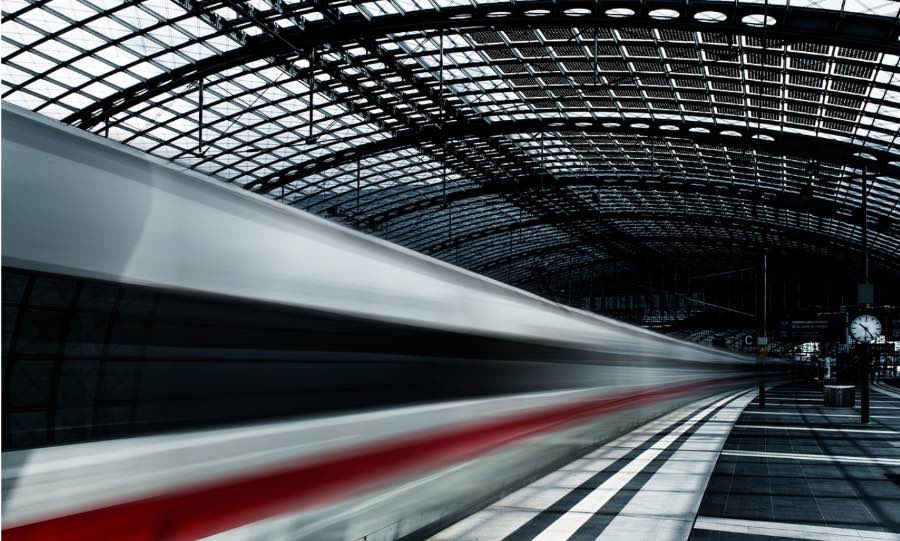
Europe’s railway sector is advancing a major digital transformation as it prepares to migrate from the ageing GSM-R (2G) communications system to the 5G-based Future Railway Mobile Communication System (FRMCS), a move set to redefine safety, interoperability and performance across the continent’s rail networks.
GSM-R, which has supported voice, data and European Train Control System (ETCS) operations for more than two decades, underpins the European Railway Traffic Management System (ERTMS). However, with technology support expected to end around 2035, the industry is racing to finalise and validate the next-generation FRMCS standard in time for a smooth and secure transition.
FRMCS will deliver a harmonised, interoperable rail communications platform across Europe, enabling seamless cross-border operations and unlocking new capabilities such as:
Ultra-low-latency safety-critical communications
Real-time train and infrastructure monitoring
Predictive maintenance and advanced passenger services
Support for Automatic Train Operation (ATO) and advanced warning systems
Built on 5G, FRMCS will significantly enhance capacity, reliability and cybersecurity, supporting both operational efficiency and the long-term digitalisation of European railways.
To ensure the readiness of the technology, the €13.5 million FP2-MORANE-2 project, funded by Europe’s Rail Joint Undertaking, began in December 2024. Coordinated by the International Union of Railways (UIC), the 34-month programme brings together 13 railways, 13 manufacturers and two mobile network operators to validate FRMCS specifications through laboratory and live-railway trials.
Testing is being conducted in labs operated by Ericsson, Nokia and Kontron, followed by field trials on railway lines in Spain, Germany, Sweden and the Netherlands, including both conventional and high-speed routes.
The outcome will be FRMCS Edition 1 (FRMCSv3) — a commercially deployable, fully validated standard scheduled for integration into European Technical Specifications for Interoperability (TSI) by 2027, enabling rail operators to begin migration in 2028.
In September 2025, Deutsche Bahn deployed Nokia’s new 1900 MHz (n101) 5G railway radio network with a cloud-native standalone 5G core, one of the first live railway implementations of this technology in Europe.
“We are preparing MORANE-2 test cases now,” said Emanuele Di Liberto, Head of Global Railway Sales at Nokia. “Lab systems and field trials will feed directly into FRMCSv3, which will form the basis for regulatory approval and Europe-wide deployment.”
Rail infrastructure managers are assessing multiple migration strategies, using combinations of 900 MHz GSM-R spectrum, 1900 MHz FRMCS spectrum and mobile network operator (MNO) services. The most likely scenario is the parallel operation of FRMCS at 1900 MHz alongside GSM-R at 900 MHz until all lines and trains are fully migrated.
Major operators such as Deutsche Bahn, SNCF and Norwegian Railways are already mapping out line-by-line and application-by-application migration paths, with an estimated seven-year transition window following FRMCS Edition 1 availability.
Railways are investing heavily in the supporting infrastructure needed for 5G, including:
High-capacity IP/MPLS fibre backbones
Cloud-native core networks
Enhanced data centres with built-in resilience and cybersecurity
Recent examples include the UK’s Project Reach fibre rollout and ProRail’s cloud-native GSM-R core deployment in the Netherlands — both designed to pave the way for FRMCS.
“The successful deployment of FRMCS depends on completing its technical specifications and ensuring they are mature, tested and ready for large-scale deployment,” said Oana Gherghinescu, Executive Director of the European Union Agency for Railways (ERA). “Our objective is to achieve a fully harmonised, standardised system with streamlined authorisation across Europe.”
While some GSM-R networks may operate beyond 2035, Europe’s rail community is aligning around FRMCS as the long-term foundation for safe, intelligent and interoperable railway operations.