PREVIOUS
Ian Gardiner Receives New Zealand Royal Honour



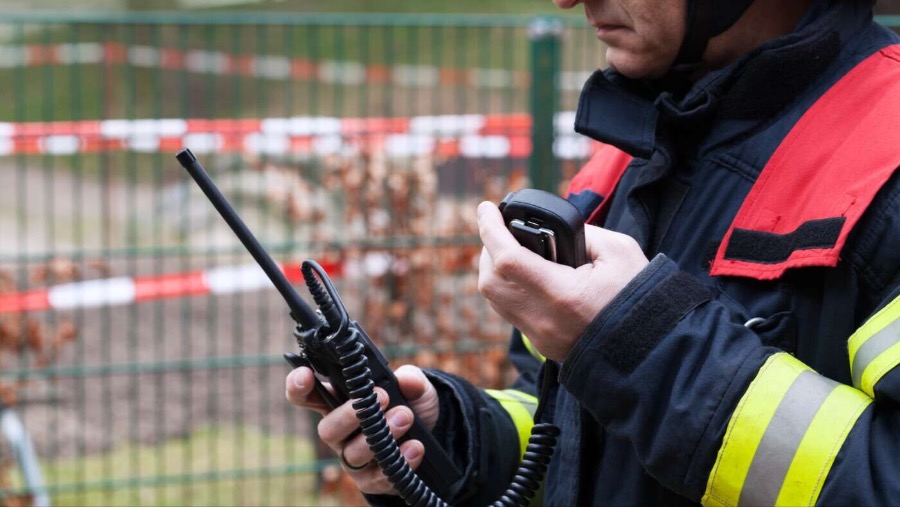
In a game-changing collaboration for Madrid Council, Orange (MasOrange Group) and Ericsson are equipping the city’s public and emergency services – including police, fire brigades, and medical responders – with advanced connectivity designed to maintain secure, reliable, and low-latency communications in the most challenging scenarios – from wildfires to natural disasters.
Madrid public safety agencies will make use of a network slice enabled at Orange 5G Standalone (SA) network in Madrid, powered by Ericsson, with Radio Access Network (RAN) and Core to provide dedicated network resources for emergency services and ensure low latency and traffic differentiation over commercial traffic.
In addition to the public network and to secure ubiquitous coverage of these critical services, the solution will come with a capability that allows for rapid deployment and relocation as needed, making them ideal for dynamic and evolving emergency situations in public safety operations. The solution features Ericsson Ultra Compact Core (UCC) and radios that connect to Orange’s 5G SA public network or to the Madrid city dedicated emergency spectrum (Band 68), depending on different scenarios and needs.
The system also delivers autonomy and uninterrupted communication for the region’s emergency responders when public network is unavailable or when ground infrastructures are potentially damaged. Through the Ericsson UCC and 5G radios, the next-gen mission critical network provides immediate, high-speed connectivity for municipal first responders, aid workers and command & control center to communicate seamlessly with each other, enhancing coordination and situational awareness dramatically. The architecture is designed with autonomous energy and redundancy to maximize resilience and guarantee continuity of critical communications in challenging conditions.
Madrid’s initiative showcases the leadership of Ericsson and Orange in mission-critical services, combining advanced 5G capabilities with innovative network architectures to empower public safety agencies. For example, firefighting teams will be able to stream real-time video from helmet-mounted cameras or rapid-response vehicles, providing the command center with live images from inside buildings or hard-to-access areas. This capability supports immediate risk assessment, victim location, and informed decision-making, while the network’s low latency and high availability keep audiovisual communications stable even during congestion or infrastructure damage.
"This project marks a milestone in the modernization of emergency services in Spain, as it guarantees secure and uninterrupted communications in the most demanding scenarios and places Madrid at the forefront of European innovation in the service of public safety. We are committed to offering robust, scalable solutions that are ready to save lives, thereby reinforcing our role as a strategic ally of public administrations," said Joaquín Colino, General Director of B2B at MasOrange.
“Our partnership with Orange shows how industry collaboration and cutting‑edge 5G can transform urban public safety. By combining Ericsson’s mission-critical solutions with Orange’s 5G Standalone network and network slicing, we deliver secure, low‑latency and high‑availability communications to keep emergency responders connected when it matters most. We are proud to support Madrid emergency services modernization and to provide a resilient, scalable model that can be replicated to protect communities across Spain and beyond”, said Somaya El Marrakchi, head of Business Development for Mission Critical Networks, Ericsson Europe, Middle East & Africa.
Funded by NEXTGEN EU funds managed by the Ministry of Digital Transformation and Public Administration as part of initiatives to modernize and digitalize public services, the Madrid Council project not only positions the city as a pioneer in digitalizing emergency communications but also offers a replicable model for other regions, including rural and hard-to-reach areas across Spain and beyond.